Rethinking Fire Management
Fire management is failing our forests. We're holding government to account.
For years, Victorians have been told that more burning equals safer communities. But recent research and the accelerating impacts of climate change show that logic no longer stacks up.
Extreme fire weather, hotter temperatures and longer fire seasons are the real drivers of catastrophic bushfires. No amount of planned burning can override those conditions. On the worst fire days, the only proven life saving strategy is simple:
On catastrophic fire danger days, the only option is to leave early.
Real safety means tackling climate change, protecting natural fire refuges and investing in rapid response when fires strike.
GECO is calling for a fundamental rethink of fire management in Victoria.
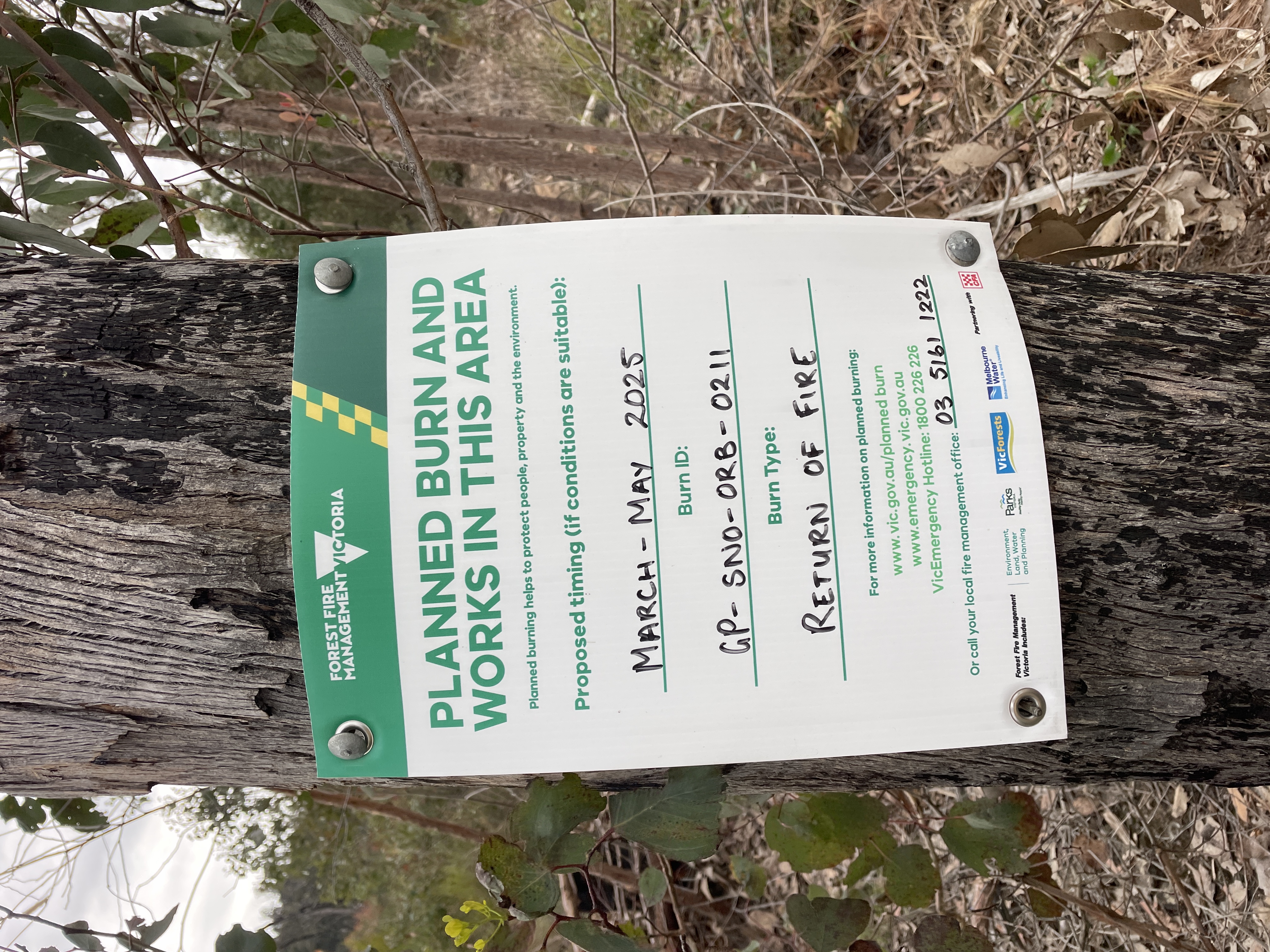
FFMVic confirmed in writing that no referral was made under the federal Environment Protection and Biodiversity Conservation Act, despite the program affecting habitat for more than 21 nationally listed threatened species. The strategic assessment process that would eventually cover future burns has not been completed. There is no approved program. There is no public burn plan.
When GECO requested the planning documents, we were told they are internal working documents not authorised for external distribution.
We lodged a Freedom of Information request. That process is ongoing.
A formal call-in request has been lodged with the federal environment minister. Our campaign continues at both state and federal level.
We will not stop until the full ecological and scientific reasoning for these burns is publicly documented, independently reviewed, and held to account.
Snowy River National Park belongs to all Victorians. The community has a right to know why it is being burned, what threatened species assessments were conducted, and what evidence supports a burn program of this scale in a landscape that has already been through catastrophic fire four times this century.
The Victorian Government is burning one of the most ecologically important landscapes in the state. GECO is fighting to stop it.
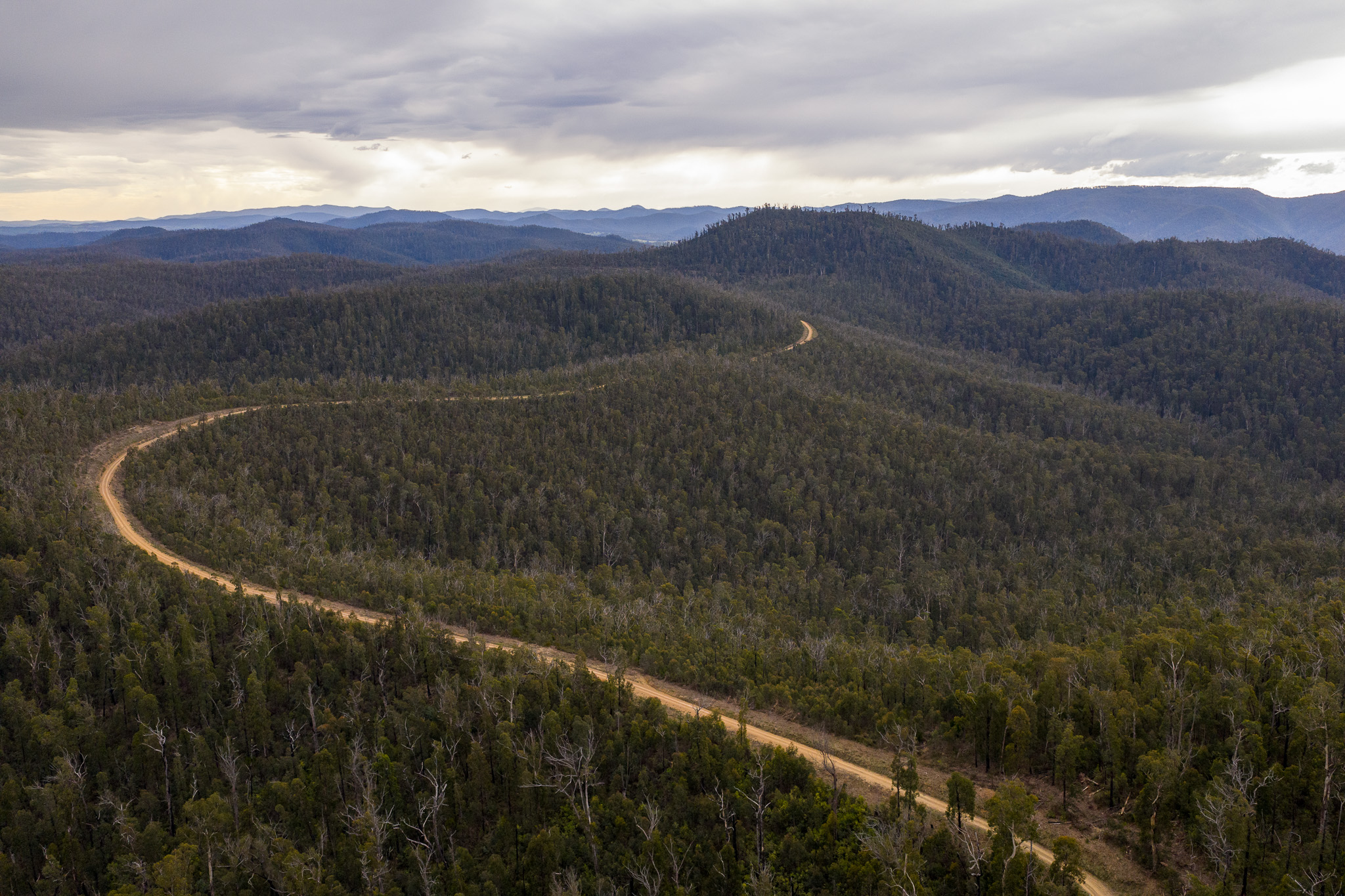
This burn targets nearly 35,000 hectares of Snowy River National Park, still recovering from the catastrophic 2019–20 Black Summer fires. A second planned burn, 18 kilometres west of the small settlement of Bonang, would add another 24,000 hectares. Together, the two burns cover nearly 59,000 hectares of recovering national park, still ecologically fragile after catastrophic fires in 2003, 2009, 2014, and most severely in 2019–20.
These burns have no credible community protection purpose. Research by Gibbons and colleagues confirms that planned burning offers no statistically significant protection to houses beyond 10 kilometres. There are no major population centres within that distance of either burn. Under the extreme fire weather conditions that drive catastrophic fires, prior fuel reduction makes almost no difference at all.
The burn area contains refuge for four critically endangered and twelve endangered species, including the Greater Glider and Sooty Owl, in a national park that sits at the eastern range limit of Mountain Ash and supports some of the most restricted and vulnerable forest communities in Victoria.
Fourteen leading scientists, including Professor David Lindenmayer AC from the Australian National University, signed an open letter calling on the Minister to pause both burns and commission an independent ecological review before any ignition proceeded.
It proceeded anyway.
Forest Fire Management Victoria burned the same area of the national park twice, in a small zone of the larger program footprint. The most recent government response confirms the program is ongoing and will continue in future seasons.
When GECO asked for the science behind it, the answers raised more questions than they resolved.
Professor Don Driscoll, a leading fire ecologist at Deakin University and a signatory to the open letter, reviewed the information FFMVic provided. His assessment is blunt. The agency's response, he notes, has a strong focus on operational justification, with an underlying belief that burning drier parts of the landscape will make a difference to wildfires, but with no evidence presented to support that belief.
The only scientific justification FFMVic offered was that fuel management reduces the fuel available to fires, which can reduce spread and intensity. Professor Driscoll acknowledges this is not entirely wrong. But he identifies what is missing: there is no modelling based on the latest knowledge that quantifies the expected benefits in terms of house and life protection. There is no consideration of biodiversity outcomes. There is no assessment of human health risks from smoke. The managers have a conceptual model in their minds about how planned burns will affect wildfires, but those models do not account for the full range of objectives that fire management is supposed to serve.
Critically, FFMVic's stated justification includes reducing the risk of bushfire to the environment. Professor Driscoll identifies this as misleading. Routinely burning the understorey in ways that reduce fire severity may benefit some arboreal species, but it will wipe out plants that need long periods between fires to rebuild their seed banks, and animals that depend on long-unburnt habitat. The claim that broadscale burning protects the environment does not hold up.
Burn decisions are being made on the day with no publicly available ecological plan, no independent review, and no federal environmental assessment.

For over 30 years, GECO's volunteers have been on the ground in East Gippsland's forests. Consistently. Across seasons, across decades, protecting habitat and witnessing destructive fires and their aftermath.
That presence matters because no independent body is tasked with verifying the ecological impacts of forest management operations on the ground. FFMVic plans the burns, delivers them, and reports on its own outcomes. In national parks, Parks Victoria has a land management role, but in practice the community has no standing body providing independent oversight of what happens during and after operations. GECO's volunteers are often the only independent observers in these forests.
What that monitoring has consistently found:
- Burns proceeding in high conservation value forests without published ecological justification
- Environmental protections being bypassed in the field
- Machinery and contractors operating with limited ecological scrutiny
- Requests for planning documents and ecological assessments going unanswered
That last point is a pattern. GECO first requested burn plans and ecological assessments from FFMVic in writing in April 2025. A joint request with Environment East Gippsland followed in March 2026. Both went without substantive response. A Freedom of Information request is now in progress. When we asked directly for the operational and ecological planning behind the Snowy River National Park burns, we were told the documents are internal working documents not authorised for external distribution.
A fire agency that cannot or will not show its ecological reasoning to the community it serves is not accountable. Government agencies cannot be allowed to mark their own homework.
The two case studies below show what happens when they do.
In Errinundra, planned burns and fire management works damaged critical frog habitat in areas known to support threatened species.
Heavy machinery was driven through breeding sites despite prior mapping and on the ground warnings. This damage was preventable.
GECO:
Documented the destruction
Reported and escalated complaints up to the Environment Minister's desk
Pushed relentlessly for accountability
After sustained pressure, we identified responsible decision makers within DEECA. Our advocacy forced internal reviews and changes to systems within the department.
The outcome:
Improved biodiversity safeguards, stronger internal processes including physical signage being implemented on breeding habitats, and greater scrutiny of fire operations in sensitive habitats.
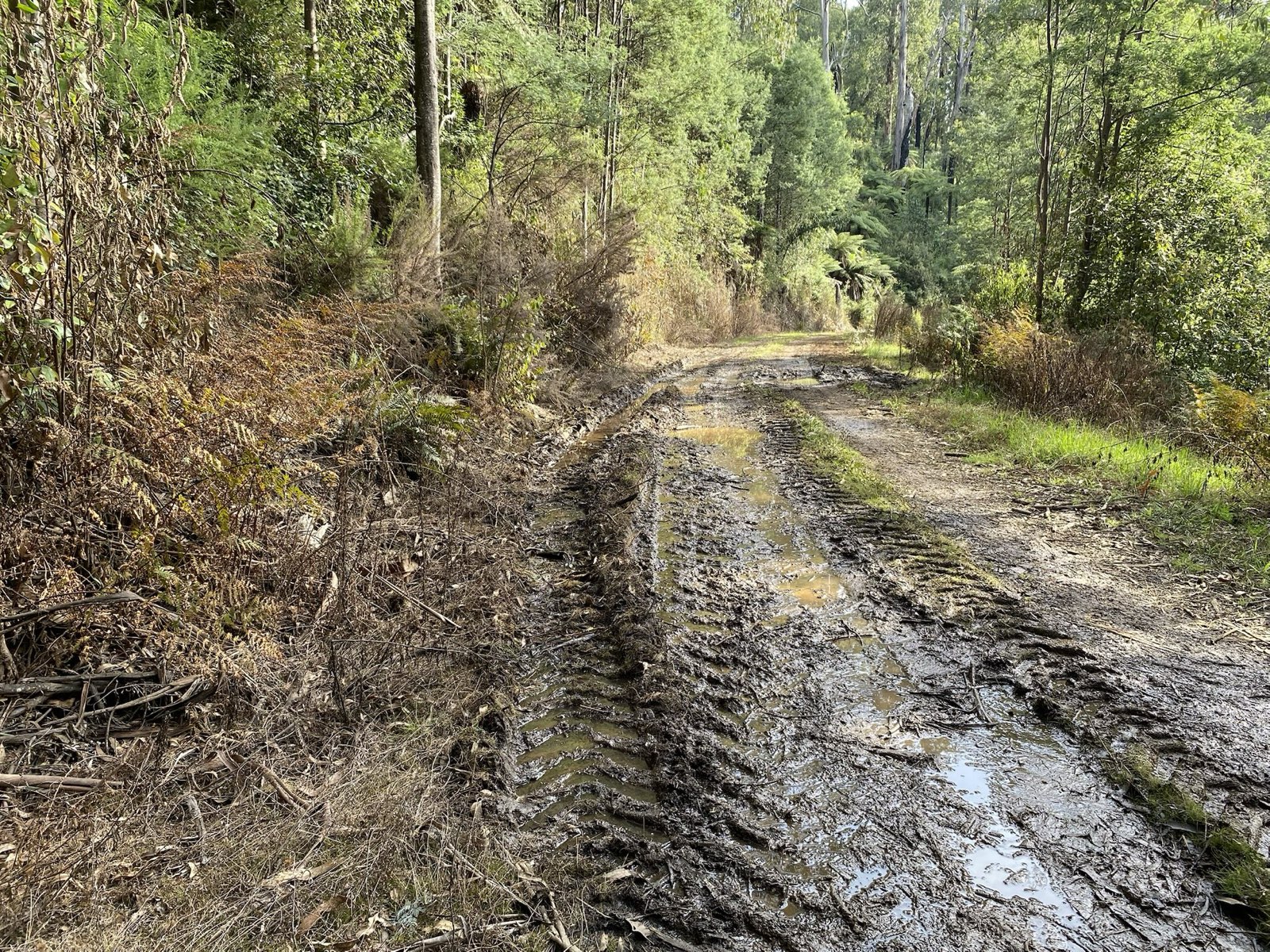
Planned burning close to homes can play a role in fire management. But the science is clear about where the priorities lie, and current fire management in Victoria is well outside them.
Protecting houses: what actually works
The most effective action for protecting a house from wildfire is not landscape burning. It is removing woody vegetation within 40 metres of the structure. Research by Gibbons and colleagues found this had a stronger and more certain protective effect on house survival than any prior burning at the landscape scale. Ember attack, radiant heat, and direct flame contact are the main causes of house loss in Australian wildfires, and all three are best addressed immediately around the building itself.
Burning far from homes does not protect communities
Beyond 3 kilometres from homes, planned burning has no meaningful statistical relationship with house survival. On the worst fire days, even the limited benefit close to homes disappears. Research following the 2003 Alpine fires found that when fire danger reached extreme levels, prior fuel reduction made almost no difference to fire severity.
Burning recovering forests can increase fire risk
After a fire, dense regrowth of shrubs and saplings is the most flammable structural state a forest can occupy. Research by Dr Philip Zylstra and colleagues found this regrowth is the strongest predictor of forest flammability, with elevated risk persisting for 20 to 30 years. Locally measured data from the Snowy River region shows that a planned burn may reduce risk briefly, then drives a 2.5 to 3-fold increase in fire risk over the following two decades.
Repeated fire devastates wildlife
A 2024 study in Nature by Professor Don Driscoll and colleagues found that sites burned three or more times in 40 years saw negative effects on wildlife populations that were 87 to 93 per cent larger than in areas burned once or not at all.
Old forests are our best fire defence
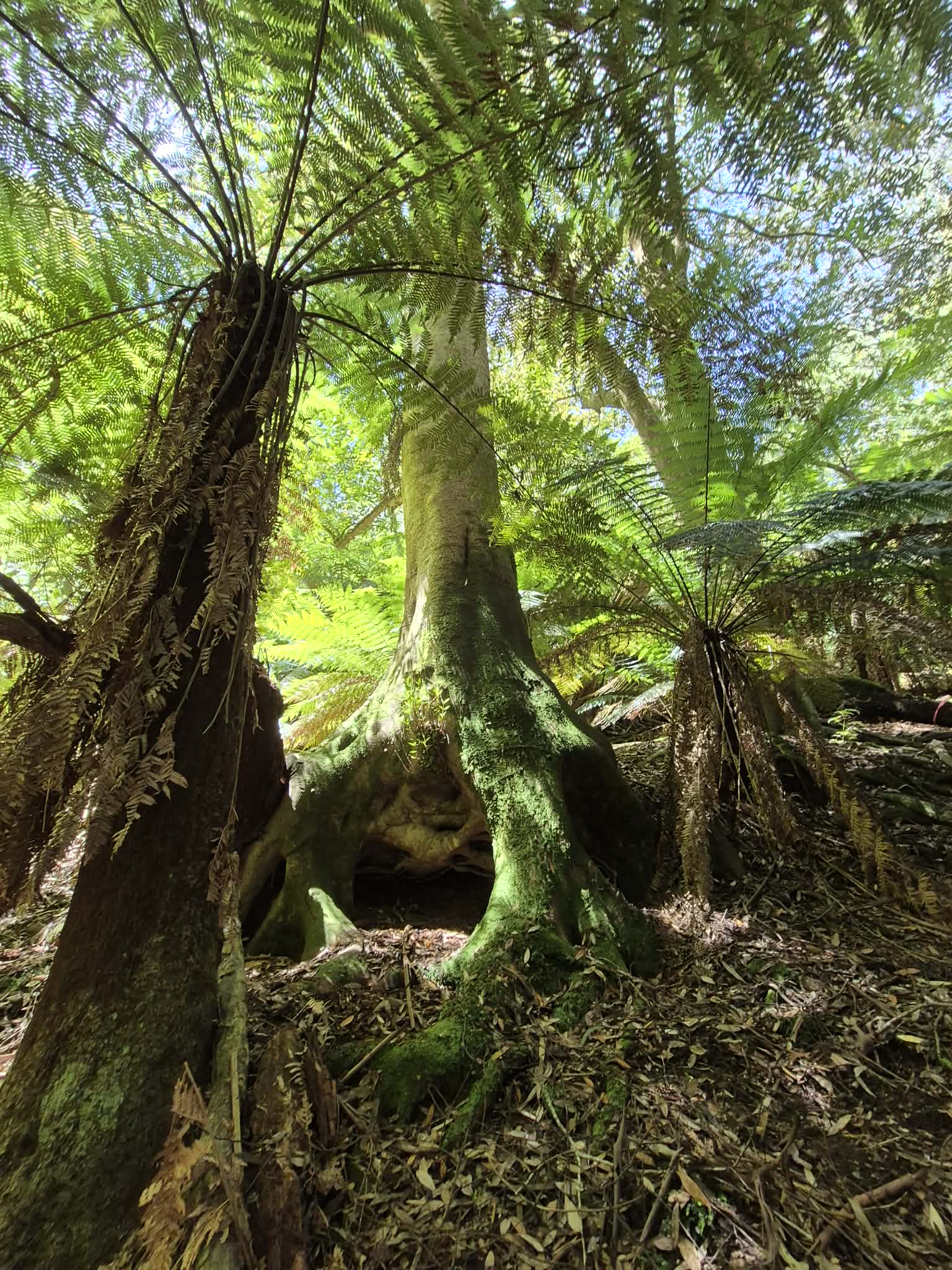
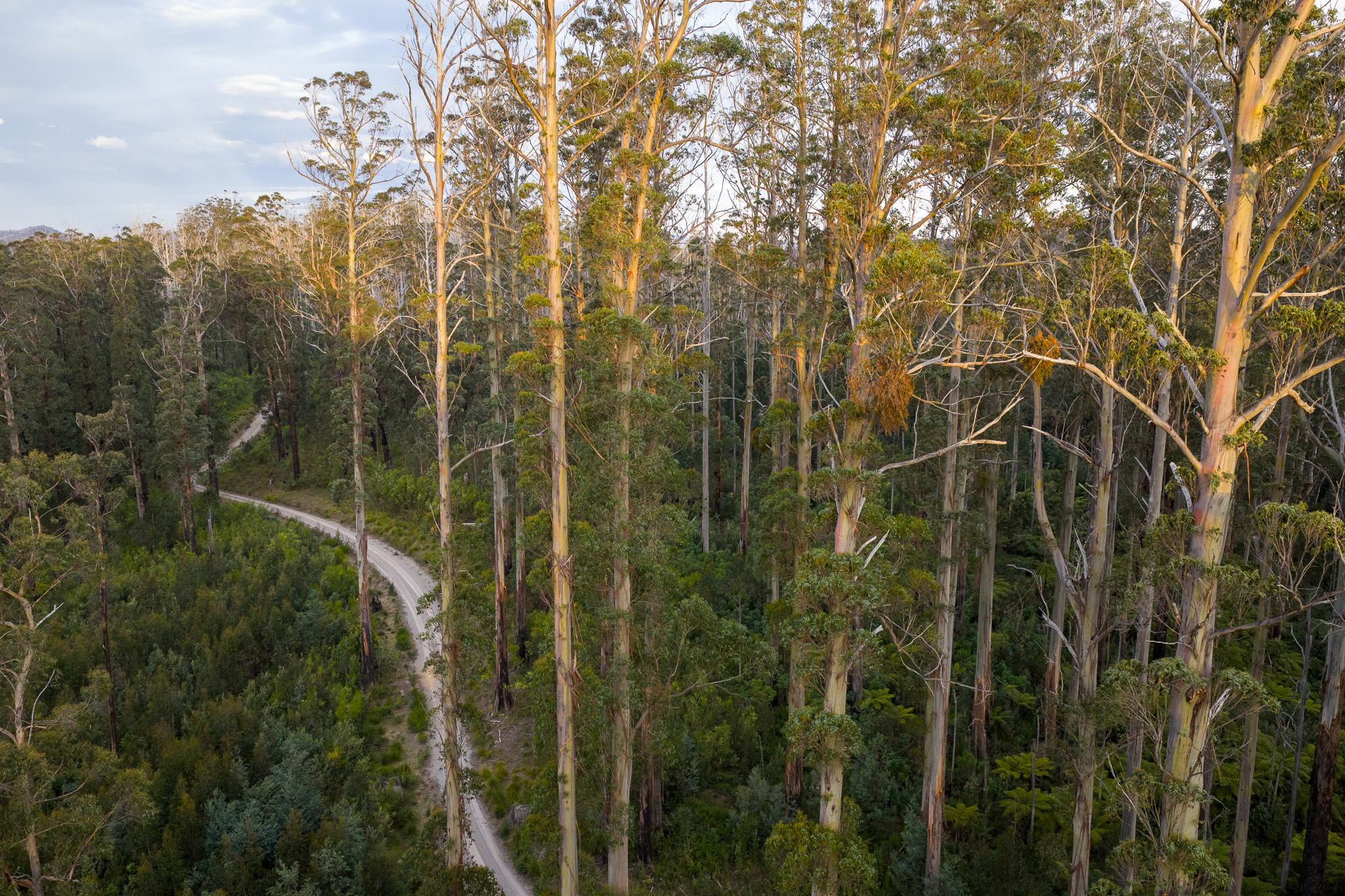
East Gippsland's wet forests and rainforests retain moisture, support complex canopy structure, and slow fire spread naturally. They are not fuel loads. They are functioning ecological systems that reduce fire risk when left to mature. We should be protecting them, not burning them.
Hollow bearing trees are irreplaceable habitat for hundreds of Australian species, including owls, parrots, gliders and bats. These trees take centuries to form and once lost, they are not replaced within meaningful ecological timeframes.
DEECA research led by Lucas Bluff in Gippsland found that planned burns cause significant losses of hollow bearing trees. Trees directly exposed to fire were almost 28 times more likely to collapse than unburnt trees, with around one in four collapsing after a single planned burn . Many were completely destroyed, permanently removing critical nesting and shelter sites.
Repeated burning compounds this damage. Even low intensity burns progressively reduce the number of large, old trees that wildlife depends on, steadily hollowing out forest ecosystems from the inside.
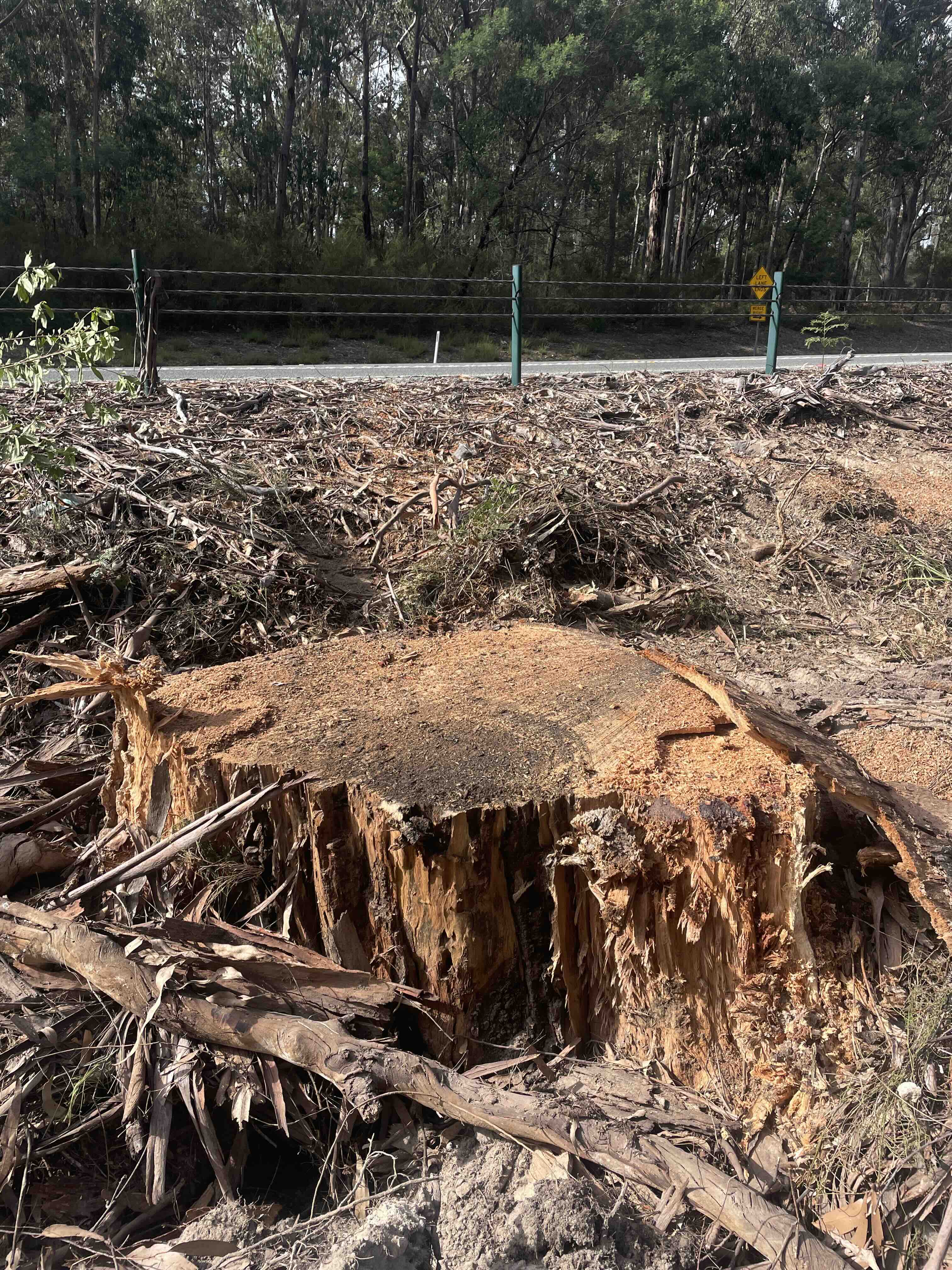
At the same time, widespread roadside tree clearing across East Gippsland, often carried out by contractors formerly working under VicForests, is further eroding hollow bearing tree habitat. Roadside reserves are vital wildlife corridors and refuges, yet clearing frequently occurs with limited transparency and minimal ecological scrutiny.
Protecting hollow bearing trees must be central to any credible, science led approach to fire management.
Fire management affects all of us. Decisions made in Melbourne offices shape what happens in East Gippsland's forests, and communities deserve honest information and access to the science behind those decisions.
GECO shares independent research, documents on-ground impacts, and keeps the public informed when agencies are not. When government agencies downplay ecological damage, refuse to release planning documents, or justify burns with claims the science does not support, our job is to say so clearly and publicly.
“We refuse to sell false hope through burn targets.”
For tens of thousands of years, Traditional Owners cared for Country through deep ecological knowledge and cultural obligation. Cultural fire, applied at the right time and in the right way, shaped the landscapes we now call East Gippsland. Colonisation disrupted those systems. Much of what we now treat as a fire management crisis has roots in that disruption.
The Victorian Government's own Bushfire Management Strategy acknowledges that cultural fire management is led by Traditional Owners, governed by kinship, eldership, and spiritual connection to Country, and that only Traditional Owners have the authority to lead it. GECO supports that position. Cultural burning, where Traditional Owners choose to practise it, is fundamentally different from the broadscale landscape burning programs GECO opposes. One is rooted in knowledge and responsibility to Country. The other is driven by political targets and agency outputs.
Any genuine rethink of fire management must centre Traditional Owner leadership, not as a footnote, but as a foundational shift in how decisions about Country are made.
What honest fire management looks like
GECO is pushing for a shift away from:
- Treating forests as fuel loads to be managed toward political hectare targets
- Ignoring biodiversity impacts in the planning and delivery of planned burns
- Withholding information from communities about what is being burned and why
And toward:
- Evidence-based decision making grounded in peer-reviewed science
- Transparent planning with publicly available ecological assessments
- Genuine Traditional Owner leadership in fire management decisions
- Prepared communities with honest risk communication
Help us hold government to account.
Join by entering your email in the section below and stay informed
Donate to support independent monitoring and advocacy
Together, we can push for fire management that actually works.
GECO supports fire management that is genuinely evidence-based, ecologically responsible, and transparent. We are not opposed to all burning. We are opposed to poorly justified burns in high-conservation forests that proceed without scrutiny, without public information, and without legal compliance.
Federal assessment of the Snowy River burns
A formal request to call the Snowy River burns in for federal assessment under the Environment Protection and Biodiversity Conservation Act has been lodged with the federal Environment Minister. FFMVic's own Chief Fire Officer confirmed in writing that no referral was made, despite the burn program affecting habitat for more than 21 nationally listed threatened species. The federal strategic assessment process that would eventually cover future burns has not been completed. There is no approved program. These burns should not proceed without federal oversight.
Full public release of burn plans and ecological assessments
GECO and allied groups have requested burn plans, ecological assessments, and biodiversity safeguards for the Snowy River program repeatedly since April 2025. Every request has been refused or ignored. A Freedom of Information request is now in progress. The community has a right to see the ecological reasoning behind decisions that affect nationally significant public land.
An independent ecological review of the combined burns of nearly 60,000 hectares
The two Snowy River burns together cover nearly 59,000 hectares. They have identical stated objectives and no published assessment of their combined ecological impact. An independent review by researchers without institutional conflict of interest must be completed before further burning proceeds.
Fire management guided by evidence, not hectare targets
Area-based burn targets drive agency planning regardless of ecological outcomes. The science is clear that broadscale burning in remote forests does not protect communities. Fire management policy should be built around what actually reduces risk to life and property: defensible space close to homes, early detection, rapid response, and investment in community preparedness.
Strong biodiversity safeguards with real accountability
Environmental protections on paper mean nothing without independent oversight on the ground. GECO's monitoring has documented burns in high-conservation forests, machinery damage to threatened species habitat, and a pattern of non-disclosure that makes independent scrutiny almost impossible. Agencies must be required to demonstrate ecological compliance, not self-certify it.
Genuine investment in Traditional Owner-led cultural fire
Cultural burning, where Traditional Owners choose to practise it, has strong scientific and community support. It is fundamentally different from broadscale agency burning driven by political targets. Genuine investment means resourcing, authority, and decision-making power, not tokenistic consultation.
Investment in rapid fire response capacity
The fires that destroy communities are driven by extreme weather conditions, not by fuel loads in remote national parks. Investment should go toward early detection, fast attack, aircraft availability, and well-supported volunteer firefighting capacity, the things that actually save lives and property when catastrophic fires occur.