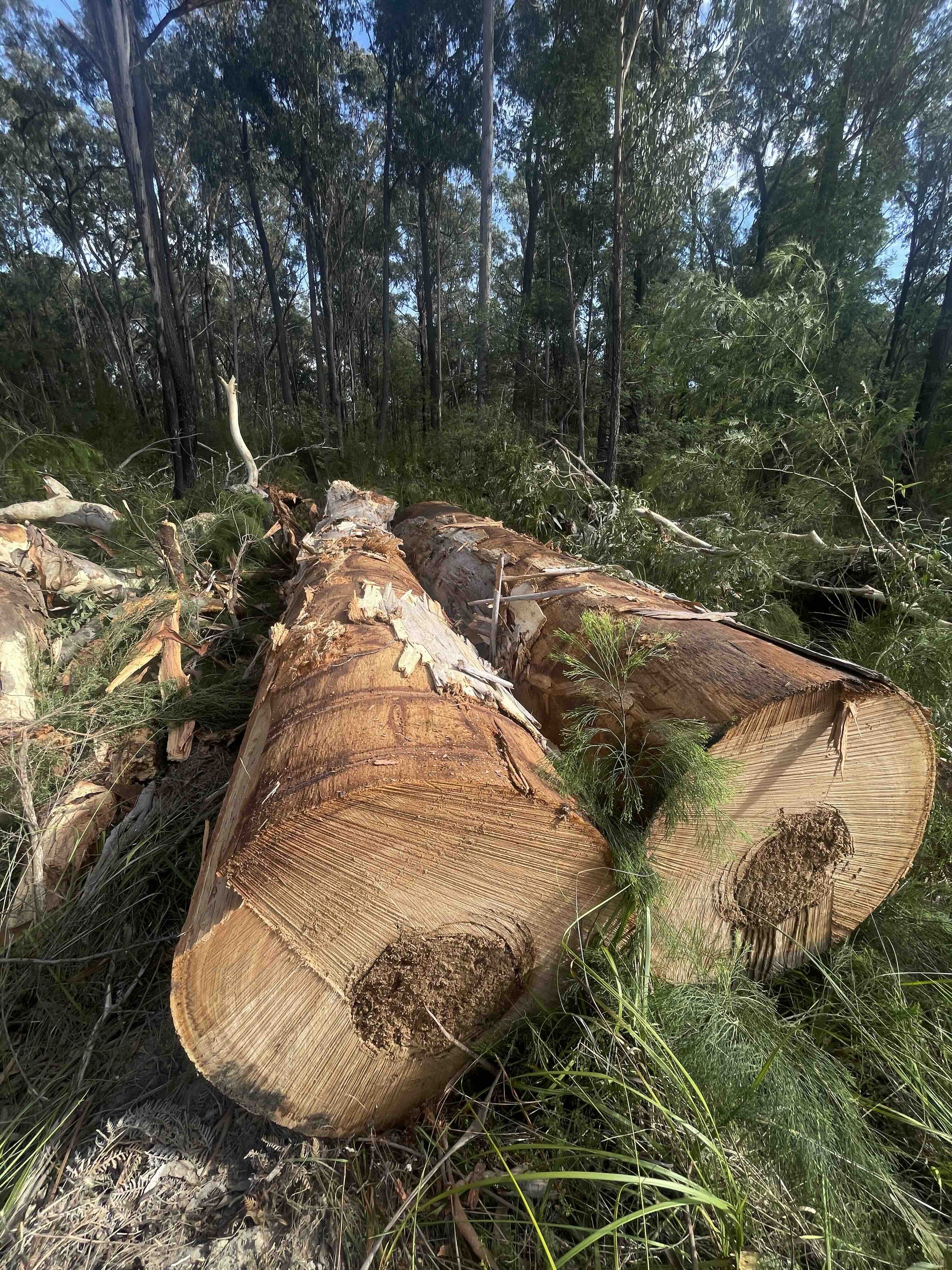
Last week we filmed logging machines clearing the roadsides of the Princes Highway between Lakes Entrance and Nowa Nowa. Watch the video below.
In April 2026, DEECA quietly rolled out Victoria's State Forest By-Products Framework. No public announcement. No consultation period. No draft released for comment. The framework document itself contains no reference to any engagement process whatsoever. It simply appeared.
We only know about it because we were paying attention.
They don't even bother with consultations anymore.
To find out who was involved in developing this policy, what advice was sought, and which industry stakeholders had input, we may have no option but to lodge a Freedom of Information request. That is what forest accountability looks like in Victoria in 2026: a community organisation having to use FOI law just to find out how a major forest policy was made.
Here is what the framework actually does.
1. It turns forest clearing into a commercial operation again
The framework openly states that by-products have "social and economic value" and that the goal is to "realise this value" through distribution to timber mills, firewood sellers, and community events like woodchops.
Once you attach a commercial distribution system to forest clearing, you create an incentive to generate more of it. More fuel breaks. More mechanical thinning. More roadside clearing. More material to move.
This is how logging comes back after the industry was supposed to end. Not through a stated policy or a Parliamentary vote. Through a back-door document released in April with no consultation and no scrutiny.
2. It removes what forests desperately need
After the 2019-20 Black Summer fires, East Gippsland's forests are in active recovery. Hollow-bearing trees are routinely targeted by Forest Fire Management operations. They are habitat and also threatened. Just like Greater Gliders, Long-footed Potoroos, Spot-tailed Quolls and dozens of other threatened species depend on them for shelter, movement, and food.
The framework acknowledges this briefly, then sets it aside. Where forests "poses fire or other safety risks," they get removed. The definition of what qualifies is left to DEECA.
Logging now, in forests still recovering from one of the worst fire events in Australian history, compounds the ecological damage at exactly the moment recovery requires it most.
3. Ecologists have no formal role in these decisions
Under the framework, decisions about what gets removed and where it goes rest with Deputy Chief Fire Officers.
Fire officers are the right people to manage fire suppression. They are not the right people to make determinations about tree removal from threatened species habitat. There is no requirement for a senior ecologist to review or approve removal from high-conservation-value areas. No independent check. No external accountability.
4. "Ecological thinning" is baked in with no scrutiny
The framework includes ecological thinning as a routine activity that generates by-products. In practice, "ecological thinning" in Victoria has been applied in wet forests with contested ecological justification. Embedding it in this framework normalises it commercially. If thinning generates revenue, there is now a structural reason to keep doing it, regardless of whether the science supports it.
5. It explicitly disclaims any influence over operational decisions
This is perhaps the most revealing line in the entire document. The framework states clearly that it "does not change or influence whether operations are undertaken, their scope or location."
Read that again. This document, which DEECA has presented as responsible governance of forest materials, has no power to stop a fuel break going through critical habitat. No power to limit the scale of clearing. No ecological safeguard of any kind.
It is a logistics and distribution system dressed up as forest policy. The clearing happens first. The framework just decides where the wood goes.
6. The Traditional Owner revenue arrangement deserves scrutiny
The framework proposes directing any revenue from by-product sales to Traditional Owners. That sounds positive on the surface.
But the framework was designed by DEECA, not co-designed with Traditional Owner Corporations. Engagement is framed as consultation about revenue preferences, not decision-making authority over Country. And critically: if revenue flows from removal, more removal means more revenue. That structure risks creating a financial dependency on ongoing forest destruction.
It is also worth asking who else benefits from this arrangement. Timber mills gain access to forest clearing. Contractors are paid to remove it. The government advances an operational agenda it has already decided on.
Traditional Owners should be key decision-makers about what happens on Country, not revenue recipients in a system designed by the agency responsible for clearing it.
Nobody was asked. Nobody was told.
There is a through line connecting every point above: this framework was developed without public input, released without public notice, and will be implemented without any public reporting requirement.
Decisions about which forests get cleared, how much debris gets removed, and who gets the logs will be made internally by DEECA, recorded in documents the public has no automatic right to see, and reviewed only after two years of implementation.
If you want to know who shaped this policy, which industry bodies had input, and what ecological advice was or wasn't sought, you will likely need a lawyer and a Freedom of Information request to find out.
GECO will be pursuing that transparency. We'll report back on what we find.
In the meantime, if you've seen similar operations in your area, we want to hear from you.
Contact us at [email protected]
